
Supercurious Series: Both Sides of the Counter with Paris Woodhull
This interview is part of Supercurious – a series of conversations rooted in our 2026 focus on curious wholesale: the eagerness to learn, the willingness to experiment, and the belief that getting genuinely curious is one of the most powerful things you can do for your business right now.
Paris Woodhull launched her illustration business from her dorm room in 2015 and has since grown it into a full-time creative career spanning prints, apparel, stickers, wholesale, murals, and more. But what makes her perspective uniquely valuable for this conversation is her 14+ years in retail, including running her own Knoxville storefront, which means she knows exactly what it feels like to be the maker and the shop owner on the other side of the table. She joined us to talk about what actually gets products noticed in stores, what makers consistently misunderstand about retail reality, and how to approach stores in a way that makes you a joy to work with.

Paris Woodhull
Q. What are the most common display or packaging issues you see that stop products from selling, even if the product itself is great?
Inconsistent branding or a lack of clear visual cues is a big one. Some products need immediate context. For example, temporary tattoos should clearly say what they are and how to use them. And make it fun. If a customer has to guess, they usually will overlook the product.
It’s also important to study how a retailer displays similar products. Does the shop hang smaller items like stickers? Do they lay them flat in a tray or display case? Your packaging should work within their system. Don’t design it solely around your craft fair setup. Retail environments function very differently.

Joyful stickers by @pariswoodhull
Q. What do you think makers and artists don’t fully understand about store owners’ reality?
Operating a store is expensive. Really expensive.
As someone who worked from home, opened a storefront, and now works from home again, I can confidently say most makers have significantly lower overhead than retailers. Store owners aren’t purchasing items simply because they’re cute. Products need to move. They need to sell. And reorders need to be fulfilled quickly and reliably. Stores won't work with you justttt because they like you ;-)
If you’re considering consignment to get your foot in the door, be realistic. Do not ask for more than 60 percent unless it’s a high-ticket fine art piece. I once had someone ask me to carry their entire jewelry line in exchange for 20% of sales. That is not standard and, frankly, it’s unfair to ask a retailer who is already carrying substantial overhead.
“It’s also important to study how a retailer displays similar products. Does the shop hang smaller items like stickers? Do they lay them flat in a tray or display case? Your packaging should work within their system. ”
Q. If a maker could do just one thing to improve how their product sells in stores, what should they focus on first?
Consistent branding and packaging.
During my time managing Rala, I saw deliveries of beautiful local products with no indication of who made them anywhere on the item. That is a huge missed opportunity. Customers cannot follow up with you, find you online, or become repeat buyers if your name isn’t clearly attached to your work.
Q. If you were advising a new maker approaching stores for the first time, what would you tell them?
Research the store before reaching out.
Does the shop have a formal process for maker submissions listed on their website? Why would your product sell well in their space? Does it fill a category or aesthetic gap they don't currently have? Answer those questions before you send an email. Your outreach will immediately be stronger.
If you decide to visit in person, do not ask to speak to the owner. After 14+ years in retail, I can tell you that interrupting an owner or manager mid-shift rarely lands well. Instead, stop by, introduce yourself to whoever is working, and make sure they are not helping a customer. Briefly explain what you do, leave a couple of samples, ask the best way to follow up, thank them, and leave. Then follow up a few days later.
Being thoughtful about their time goes a long way. If you are a good fit, you have now positioned yourself as a delight to work with.

Mural magic for @cacamericorps
Q. What is one thing you’ll miss about running your own retail space? And one thing you won’t?
I’ll miss my team the most. I am so grateful for the artists and people I met through the shop. They made that chapter incredibly special.
What I won’t miss is the $$$ overhead. And I also learned just how introverted I am. I’ve realized I truly thrive working from home. It was such a sweet season, and I’ll always carry pride in what my team and I built together. We made it over 3 years in one of the most competitive retail areas in Knoxville 😎🥳
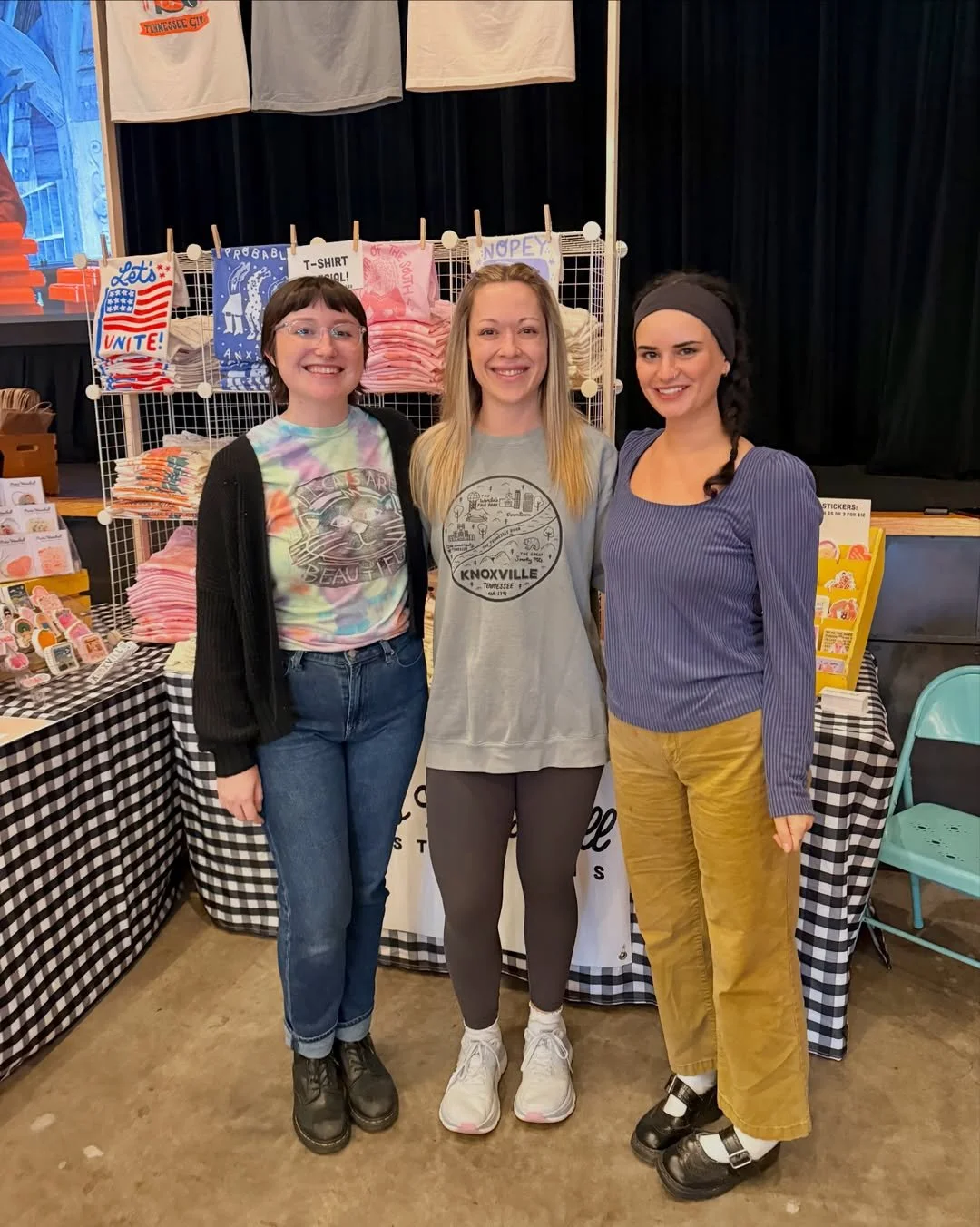
The team at @retrocraftfair
Paris brings something rare to this conversation — she's been on both sides of the wholesale relationship, and it shows. Her advice is practical, specific, and genuinely useful whether you're approaching your first store or trying to figure out why your product isn't moving the way you hoped. You can explore Paris's work and wholesale offerings at pariswoodhull.com.
Looking for more practical advice from real makers or inspiration for better outreach? Check out these free resources…