
Faire Wholesale Reviews 2026: Is It Worth It for Independent Brands?
Updated April 2026
You can love Faire or hate Faire — but when it comes to growing wholesale as an independent brand, Faire is now a key part of the landscape.
Faire (also called Faire Wholesale or Faire Wholesale Marketplace) is a wholesale marketplace connecting independent brands (many of them handmade lines) to independent boutiques. They used to be one of several wholesale marketplaces — including Abound, Tundra, Bulletin, and others — but are now the dominant option in the space as so many marketplaces have closed in recent years.
In our work with 2,000+ makers at Wholesale In a Box, we’ve helped independent brands of all sizes and styles thrive with wholesale. We are also part of a select industry group that advises Faire and has quarterly touchpoints with the Faire team. So we’ve learned a few things about Faire -- especially how it really works for most makers, and how makers can use the online wholesale marketplace without getting burned.
There are certainly still things to be cautious about with Faire. But there are also many fantastic facets of what they do and enable for makers. The reality is that Faire is one key tool to consider when it comes to growing wholesale — and we want to support you in using that tool effectively and wisely.
In this article, we’ll help you:
Understand what Faire is and how it works.
Get clear on Faire's commissions, fees, rules, and protocols — including what it actually costs you per order when everything stacks up.
Read real reviews of Faire from independent brands like yours.
Get straight answers to the most common Faire questions — from how the algorithm works to whether it's worth it in 2026.
Weigh the pros and cons and decide if Faire is a good fit for your business right now.
Learn to get better results on Faire if you decide to use it (or dive straight into our Making Faire Work course if you're ready to go deep).
Understand how to use Faire alongside direct outreach to stores — so you're not dependent on any single platform.

What Faire Is and How It Started
Faire is an online wholesale marketplace based in San Francisco that connects product companies with stores. It was established in 2017 under the name Indigo Fair -- since changed to Faire (or Faire Wholesale) because of a trademark issue -- and has been growing steadily since. It was founded by a Square and Square Cash alum, and has raised a lot of venture capital since inception.
In terms of structure, it works like any wholesale marketplace. Makers apply to be part of Faire, create a storefront with their products, and stores are able to search and shop all of those products.
Etsy Wholesale was Faire’s predecessor but closed around the time that Faire started to grow. Since Faire started, several other wholesale marketplaces have joined them. Bulletin, Creoate and others are all options for small product companies who want to sell in this way. (You can find a comparison of the main wholesale marketplaces here.)
How Faire Works for Makers and Independent Brands:
Application. You must first apply and be approved to become a maker on the platform. This process can be a bit opaque and sometimes you’ll be waitlisted or rejected for reasons you won’t be privy to.
Approval. Once you’ve been approved you’ll create your shop page. The first 1-4 weeks of your shop’s life on the platform are crucial for establishing a positive track record.
Fees, costs, and commissions. It doesn’t cost anything for the maker to join, but Faire takes a percentage from orders placed on the site. First time store orders have a 15% commission plus a $10 fee, while all reorders have just the 15% commission. In addition, there is a payment processing fee ranging from 1.9% to 3.5% + $0.30/transaction.
Messaging. Faire has a set of email and messaging tools that you can use to communicate with stores. While it’s crucial to be responsive on these channels (or Faire’s algorithm will penalize you), you are also permitted to communicate directly with stores off the platform (for instance, via email) — more on that here.
Success criteria. Faire has evolved over the years and as it has grown, what’s required in order to be seen by stores has increased. As of 2026, successful brands on Faire generally prioritize being very active, engaged, and responsive on the platform. Policies (e.g., wholesale minimum) that align with Faire’s norms also play a big role.
Faire Direct. One way a maker can avoid paying commission on Faire orders is through the Faire Direct program. If stores use your personal Faire Direct link to order (or meet other specific criteria), they will have a 0% commission.
Straight Answers to Common Faire Questions
Is Faire worth it in 2026?
Two things determine whether Faire is worth it for your business: the numbers, and the work.
On the numbers: "worth it" means your take-home rate after commission, fees, shipping, and any promotions still leaves you with acceptable profit — and that Faire is competitive with what you'd spend acquiring wholesale customers another way (trade shows, direct outreach, reps). For many brands that calculation works out. For others — especially those with tight margins, low order minimums, or products that don't lend themselves to easy reordering — it doesn't.
On the work: Faire today is not a set-it-and-forget-it platform. Succeeding on it requires active, ongoing effort — keeping listings fresh, staying on top of metrics, showing up consistently over time. That's not a criticism of Faire, it's just the reality of how the platform works now. So the question isn't just whether the math works. It's whether the math works AND whether Faire is where you want to spend that energy, compared to other ways you could be growing wholesale.
How do I get accepted to Faire?
Acceptance is partly in your hands and partly not. What you can control: your product photography (this matters more than almost anything else at the application stage), how clearly your brand presents itself, and your wholesale track record. What you can't control: buyer demand for your category at that specific moment, and how many sellers Faire already has making products like yours. The Faire team has confirmed that acceptance decisions are largely about fit at a given point in time — not just the quality of your line. So a rejection is not a verdict on your work. And for all of those reasons, it is worth reapplying when something significant in your line or presence has changed, or simply when enough time has passed that the category landscape may have shifted.
What are Faire's fees for sellers?
The costs stack on top of each other in ways that are easy to miss. Here's what's actually coming out of a typical order: a 15% commission on every order, a flat $10 new customer fee on first orders from each new retailer, and payment processing fees ranging from roughly 1.9% to 3.5% plus $0.30 per transaction. On top of that, if you're running any promotions or absorbing shipping costs, those come directly out of your payout too. When you add it all up on a typical new customer order with a modest promotion, you're often keeping somewhere between 70 and 78 cents on the dollar. On a clean repeat order with no promotions and no issues, it's closer to 81 or 82 cents. The gap between new and repeat customers is one of the most important things to understand — it's why building a base of reordering stockists matters so much financially, not just relationally.
Can I sell on Faire and Etsy (or Shopify) at the same time?
Yes — brands on Faire also sell retail through Etsy, Shopify, or their own website. Faire operates as a separate wholesale channel, so the two don't conflict. The main thing to know is that your wholesale prices on Faire need to match your wholesale prices elsewhere — you can't charge stores more on Faire than you charge them directly. The practical challenge is keeping inventory accurate across channels so you don't oversell.
How does Faire's algorithm work?
Faire's algorithm determines how visible your brand is to buyers — and visibility is most of the game on the platform. It's driven by three things working together. First, your listings: titles, photos, descriptions, catalog size, and how fresh and seasonally relevant your products are. Second, your customer service metrics: whether you ship on time, your cancellation rate, how quickly you respond to messages, your reviews, and whether orders arrive complete and undamaged. Third, buyer and marketplace behavior: what retailers are searching for, their past behavior on the platform, and what's trending in your category. The first two you can control directly. The third you can't — but strong listings and reliable operations remain key. The clearest way to understand the algorithm is this: it's designed to surface brands that reduce risk for buyers. Brands that are easy to find, easy to evaluate, and easy to reorder from get prioritized. Brands that set things up once and go dormant, don't.
What is Faire Direct and how does it work?
Faire Direct is a program that lets you bring retailers to Faire through your own unique link. When they order through that link, you pay 0% commission — just the payment processing fee. That means your take-home rate on those orders jumps from around 81% to somewhere between 87 and 92%. For any retailer you already have a relationship with, or any new lead you're directing to Faire yourself, using your Direct link is often right move if you’re really trying to build your presence and results on Faire. That can work very well, but it's worth understanding that once a retailer is inside Faire, they're browsing a marketplace — not just your store. And there are some shipping cost considerations with Faire's Insider program that are worth thinking through before you start directing large volumes of retailers through the link.
Why are my Faire sales declining?
A sales decline on Faire almost always comes back to one of three things: listings that haven't kept up with the platform's current standards, a customer service metric that's dragging you down in the algorithm, or simple drift — catalog going stale, engagement dropping off — that the algorithm is now reflecting back at you. What it almost never means is that your work isn't good or that wholesale isn't viable for you. The platform changed significantly around 2022 when Faire opened to far more brands, and what worked before that — a relatively passive presence — simply doesn't work now. So the question to ask yourself isn't just "why did sales drop" — it's whether you're doing the active, ongoing work the current platform requires, and whether the return on that work still makes sense for your business.
What are the best alternatives to Faire for wholesale?
The most important alternative isn't another marketplace — it's direct outreach to stores. When you reach out to shops directly and they order through your own wholesale system, you keep 100% of the wholesale price, you own the relationship, and you're not dependent on any platform's algorithm or fee structure. It's more work, but it's also more sustainable long-term. Beyond that, a handful of other wholesale marketplaces exist — Creoate, IndieMe, and a few others — though none currently comes close to Faire's buyer volume in the US. Trade shows are another avenue, though the cost-to-result math is very different. The honest framing is that alternatives to Faire aren't really about finding a cheaper or easier version of the same thing — they're about building a wholesale strategy where Faire is one tool among several, so that if it changes or stops working, your business doesn't change with it.
4 Things About Faire Most Makers Get Wrong
Get your free guide & discover:
🔓 What Faire actually requires to succeed (and what most sellers never find out)
🔓 The real limits of the platform — before they cost you time and money
🔓 Exactly how to decide if Faire is worth it for your specific business
Maker Reviews of Faire
We reached out to several makers who have strong wholesale businesses and a lot of experience with Faire. They were generous and honest in sharing their thoughts on Faire, in terms of its impact on their business and what they would recommend to other makers.
Many of the stores were ordering in December, some a week before Christmas, so it was definitely a different wholesale experience than I'm accustomed to. Usually I'm wrapping up wholesale orders with established stores in the fall. I liked that it didn't require much effort on my part, and was another tool to get wholesale orders. - Dani from Dani Barbe

Dani at work in her studio. Via @danibarbe
I think there are a lot of pros to working with Faire, but I'd say the biggest one is the exposure to lots of different buyers — and types of buyers — than you might come across otherwise. I've received lots of orders from shops I never would have considered pitching to on my own. - Theresa from Boss Dotty Paper
We’ve been on Faire since COVID, and our numbers have steadily declined since 2023. We update our shop quarterly, regularly rewriting copy, adding new products, refreshing photos, and updating our About Us, but we continue to see a significant drop in visibility and sales.
When I search for our brand from a separate account, our designs are very difficult to find—even when searching specifically for “concrete cigar ashtrays.” Instead, the results are flooded with mass-produced items, many of which are not even concrete cigar ashtrays. There also appears to be a large number of duplicate designs coming from overseas manufacturers.
We also invested in promoted listings at $150 per month and committed to running them for a full year to allow for a complete cycle. During that entire year, we gained only three new accounts, and the cost of advertising far exceeded the return.
With the continued addition of new shops to the platform, competition has increased dramatically. While we understand growth is necessary, the volume feels excessive. - Jennifer from StorcksDesigns
I don't mind Faire’s commission fees because I'm not spending money on advertising. - Bill from West Park Creative

Bill in his studio. Via @westparkcreativestl
I've gotten a lot of new retailers through Faire, which is amazing, but they take 25% of my sales, which is high when my prices have already been cut in half. So far, I've been seeing Faire as a positive tool, but part of me also feels helpless because I don't have a robust enough retailer base to not use it. Faire requires no outreach or effort after you upload your catalog. Orders come in. you have little contact with the retailer or buyer, and your responsibility is solely to fulfill the order. There is no harm in signing up for Faire and see if it works for you -- are retailers finding you? Do you get consistent orders? For many, it will be worth it. For others, it won't be worth the percentage they are losing to Faire, especially if they have a decent amount of retailers who are ordering from them consistently. For many others, like me, it will be more of a balance -- does Faire supplement my wholesale income enough for me to continue using them? - M in Tennessee
It’s relatively easy for a new maker to set up. I find it to be easier than Etsy and I’m in front of a lot more prospective retailers than I could be by just reaching out to shops on my own. Also, Faire seems to be promoting the marketplace a lot at the moment, so I’ve noticed more traffic on my page. Faire’s commission percentage is kind of high, 25% (updated in May 2023 to 15% + $10) on new orders and 15% on reorders. Also, I’m concerned about building a business on a platform that isn’t my own. - Robyn from Pearl and Ivy Studio

Robyn in some of her jewelry. Via pearlandivy_studio
Most orders on Faire are small or only meet my minimum (I do have a lot that are larger though or reorder regularly.) The first time order commission is high, but I feel it's offset by the ease of acquiring the new customer and the marketing that Faire is doing as well as offering services I can't offer (returns, terms). The categories seem to be filling up quickly, but I'm sure new ways will be implemented that allow active sellers to get more visibility. - Stacey from Mineral and Matter
Pros and Cons of Faire for Independent Brands & Makers
People often have very strong opinions about Faire — but the reality is that it’s like any other business tool and it has pros and cons. The key thing is to decide whether it’s the right tool for you, at this time… and if so, choosing an approach that really fits your goals and your values.
Pros of Using Faire for Independent Brands:
Providing access to a large pool of potential buyers
Not guaranteed exposure but a chance to be seen by retailers you wouldn’t otherwise have a path to.
Lower-friction orders from cautious retailers
Net terms, easy reordering, and platform trust reduce the risk for a store to try a new brand (or even reorder.)Supplementing your own wholesale outreach systems
Filling in the gaps between trade shows, outreach periods, or seasonal sales pushes.
Making reorders easier for existing stockists
Even shops you found yourself may prefer the convenience of the platform.
Giving you feedback and information more quickly
Faire can give you information and feedback pretty fast, for the most part — views, saves, orders, reorders — even when that feedback is frustrating or incomplete.
Cons of Using Faire for Independent Brands:
Commission rates and payment processing fees are charged on every wholesale order, for every store, for the lifetime of that store relationship.
To be reliably seen and discovered on Faire, it’s necessary to invest time and attention into being responsive, engaged, keeping your listings fresh, and aligning your policies with what buyers on Faire expect.
Faire’s algorithm often shows shops with lower minimums or prices alongside (or in the same area) as your products — meaning you may end up with stockists wandering away from you after an initial order.
Your store accounts don’t automatically “go with you” if Faire changes or closes or if you decide to move off the platform.
It is less easy to build personal connections with stores than it is if they order directly from you.
Faire is a large company funded by venture capital that has a lot of pressure to grow very quickly. In some cases, this may mean that they put their own growth and needs ahead of makers’ needs.
Things to Consider When Deciding Whether to Use Faire
If you’re deciding whether to try Faire to grow wholesale, especially as a handmade line, here are a few things to consider:
Make sure Faire commissions will work for your business and products.
Faire can be a great way for makers to get exposure, but Theresa from Boss Dotty Paper Co reminds makers to make sure it works for the specifics of your business: “You definitely have to consider whether it works for you financially, and potentially adjust your pricing.” There are expenses related to using Faire beyond even the commission — so it is important to really dig into your pricing and make sure there is room for an additional 20-30% cost before you get started on the platform.Consider Faire in the context of your overall business and wholesale strategy -- not as a “one stop shop” for wholesale.
It’s wise to view Faire as one wholesale tool among many, rather than as the entirety of your wholesale strategy. Stacey from Mineral and Matter suggests, “Don't put all your eggs in one wholesale basket, keep your own wholesale platform as well (flashbacks to Etsy Wholesale closing).”Prepare to put in the work.
Today, succeeding on Faire means actively managing your presence. It means keeping your catalog fresh and seasonally relevant, optimizing your product titles and photos on an ongoing basis, and maintaining strong performance metrics across the board — lead times, cancellation rates, responsiveness, reviews. All of these factors are important from Day One on the platform.Be strategic about how you use Faire.
We recommend using a balanced approach that includes direct outreach to new shops, cultivating relationships with your current stockists, and using the marketplaces (like Faire) wisely. Stacey also suggests setting up “guidelines for how/who you refer to your Faire platform and who you refer to your regular wholesale platform” rather than using Faire for all of your wholesale relationships.
How to Get Better Wholesale Results With Faire
Faire can be a powerful wholesale channel — but only if you use it intentionally. Here are some high-level tips and reminders to help you get the most out of the platform without letting it run your business.
Mindset & Strategy
Don't expect Faire to handle wholesale for you. The platform can facilitate transactions, but it can't build relationships, set your strategy, or ensure your long-term stability.
The "set it and forget it" era ended around 2022 when the platform opened to far more brands. If your approach hasn't changed since then, that's likely why your results have.
Faire's incentives aren't perfectly aligned with yours. They optimize for GMV and retailer retention, not maker sustainability. Understanding that makes everything less mysterious and less personal.
Know Your Numbers
Calculate your true cost per order after all fees stack up — commission, new customer fee, processing fees, shipping, promotions, and ads. Most brands have never done this and are flying blind.
Compare Faire's customer acquisition cost to your other channels (trade shows, outreach, etc.). Faire may be your best option or your worst — but you need the numbers to know.
Factor in lifetime value, not just first-order profit. A $150 opening order that turns into quarterly reorders over years can be worth thousands. But if reorders aren't happening, the math doesn't work.
Listings & Visibility
Your listings are the highest-leverage thing you control. Clear, keyword-rich titles (35–50 characters), strong photos (minimum four per product, lead with white background), and descriptions that help a retailer understand why their customers will buy it.
Keep your catalog fresh. Brands that add new products rank 20% higher. Add products at least quarterly — seasonal bundles, new colorways, or limited editions all count.
Accurate tagging, categorization, and seasonal relevance matter. Retailers browse and filter by these, and the algorithm uses them to match you with the right buyers.
Performance Metrics
Faire is actively scoring your behavior and using those scores to determine how visible you are. Lead time accuracy, cancellations, responsiveness, reviews, missing/damaged items — all of it compounds over time.
Brands with 35+ five-star reviews see roughly a 10% conversion bump. Ask for reviews — a simple post-delivery message makes a big difference.
Once any customer service metric gets above 25%, it becomes very difficult to recover your sales momentum. Stay ahead of this.
Reorders & Relationships
Reorders are dramatically more important than first orders — financially, algorithmically, and relationally. Prioritize them.
Build relationships off the platform. Find retailer emails, keep your own CRM, and reach out quarterly. Faire is 100% fine with you contacting stores off-platform — you just can't move the ordering off-platform.
Use the order itself to build the relationship: confirm promptly, communicate proactively, pack thoughtfully, and follow up about three weeks after delivery.
Ads & Promotions
Don't run ads before your fundamentals are solid. Ads amplify what already exists — strong or weak.
Treat promotions as a marketing expense to evaluate rationally, not an emotional trigger. Run the math: does the discount make you more money than it costs, especially when you factor in reorders?
For Faire Markets, a simple 5% promotion gets you Faire's matching incentive and costs almost nothing if no orders come in. Pair it with communication to your existing retailers.
Protect Yourself
Keep stockist records somewhere you own. If Faire changes, contracts, or disappears, your business shouldn't change with it.
If Faire isn't working and the numbers don't add up, leaving is a legitimate business decision, not a failure. You can pause, deactivate, or delete — and redirect your energy to channels that serve you better.
👋 Want to dig deeper? Making Faire Work is our dedicated course covering exactly this — with step-by-step guidance on listings, metrics, promotions, and building a Faire strategy that actually holds up over time. Learn more here.
How to Grow Wholesale That’s Not Dependent on Faire
Even if Faire is working well for you, it’s crucial to think about Faire as one tool in your toolkit — not as your entire wholesale strategy. The method we teach in the Wholesale In a Box course does guide you to use the marketplaces effectively (and if Faire specifically is your focus, our Making Faire Work course goes deep on exactly that), but we also advocate a more active approach that can complement your efforts on the marketplaces (or replace the marketplaces if you prefer.)
We advocate for a balance of direct outreach to shops (in which all of the relationships with stores are between you and the store with 0% commissions) and using the wholesale marketplaces in smart ways. This more balanced approach has a few advantages:
It cuts your risk, since with Faire, stockist relationships are owned and mediated by the platform.
It will improve your Faire sales, especially if some of your direct outreach directs stores to your Faire Direct link.
It allows you to take growth into your hands and on your schedule, rather than being so reliant on the algorithm of a single platform.
👋 Faire: Myth vs. Reality
Wondering if Faire is actually worth it for your business? Our free guide — 4 Things About Faire Most Makers Get Wrong — cuts through the noise so you know exactly what the platform requires to succeed, what its real limits are, and whether it's the right fit for you..Click here to get it free.
What a Balanced Wholesale Strategy Actually Looks Like
To give you a sense of what a balanced strategy, that’s not dependent on Faire, can look like, we asked makers why they both do direct outreach to stores and use Faire — and if they had any tips for using the two approaches together. Here is what a few of them had to say…
Wholesale in a Box’s method of direct outreach excels at helping you cultivate personal relationships with buyers. It's definitely possible to use both [direct outreach and Faire.]! I actually refer buyers to Faire in my direct outreach emails (via a custom link so I'm not charged commission). - Theresa from Boss Dotty Paper Co
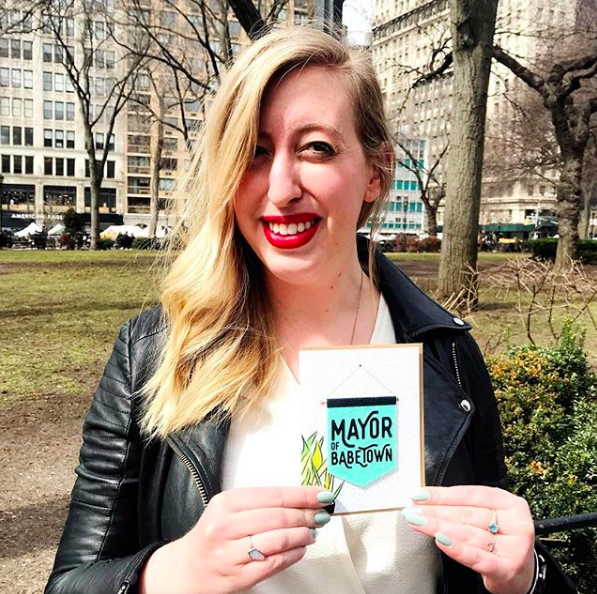
Theresa with one of her cards. Via @bossdotty
Faire is nice because once you upload your pieces onto the site, you can mostly sit back and wait for orders. I think it's a nice additional tool in your wholesale tool belt, but I'd never recommend solely relying on Faire. It's similar to makers, such as myself, who were on Etsy Wholesale. When that platform closed, many makers felt lost. I look at Faire as providing nice filler orders that come in, but I don't depend on it.
When I use Wholesale in a Box’s method, I direct buyers to my line sheets / catalog and my wholesale portion of my website. I prefer this because I'm not dealing with a 15% - 28% commission on orders. I can offer a more robust wholesale catalog, interact with the buyers, solve any issues that may arise, and really develop those relationships and reorders. It is more legwork and I'd be unlikely to do this without Wholesale In a Box's system and help. - Dani from Dani Barbe
I think I get different customers from different efforts. Some have responded to my outreach on Faire, but mostly it has brought me stores that I hadn't reached out to yet. The Wholesale In a Box direct outreach method continues to be successful for me and I send all of those leads to my own wholesale website. Leads that don't respond after a couple attempts I may send to Faire and have had some success getting a couple orders that way. - Stacey from Mineral and Matter
Wholesale In a Box is about a community. It encourages you to network, explain who you are, and build relationships. I think it's possible for them to work together and supplement each other well. To me, connection is important, and Wholesale In a Box allows me to have connection to the stores I'd like to see my work in. - M in Tennessee
I have so much respect for the balanced, wise, grounded approach that these makers have when it comes to growing their businesses. And I hope that you find the right mix of tools to help you grow in just the way you want to, so you can do the work that you love now, and in the future.
Faire can be powerful. But ultimately, the relationships that create the foundation of your business are the main asset you have -- and it’s wise to cultivate those relationships in ways that are balanced and sustainable. That may mean using several wholesale platforms and tools simultaneously, and strategically.
Let us know if you have other questions about Faire or Wholesale In a Box! We’re happy to dig into your particular business goals and product line to help you explore the right strategy for you.