
What Makers Need to Know About IndieMe
Faire tends to dominate the wholesale marketplace conversation these days, and for good reason: it's the biggest kiddo on the playground at the moment. But if your line is 100% handmade, IndieMe is a platform worth knowing. It's one of the longest-running wholesale marketplaces around, and it works quite differently from Faire, especially in how it charges makers and how buyers find them.
IndieMe won't be a fit for every brand. But since it can be so powerful to find the right marketplace for your product and ethos, we're digging into the details below, including an interview with IndieMe's owner, Jackie Adamany.
What Is IndieMe?
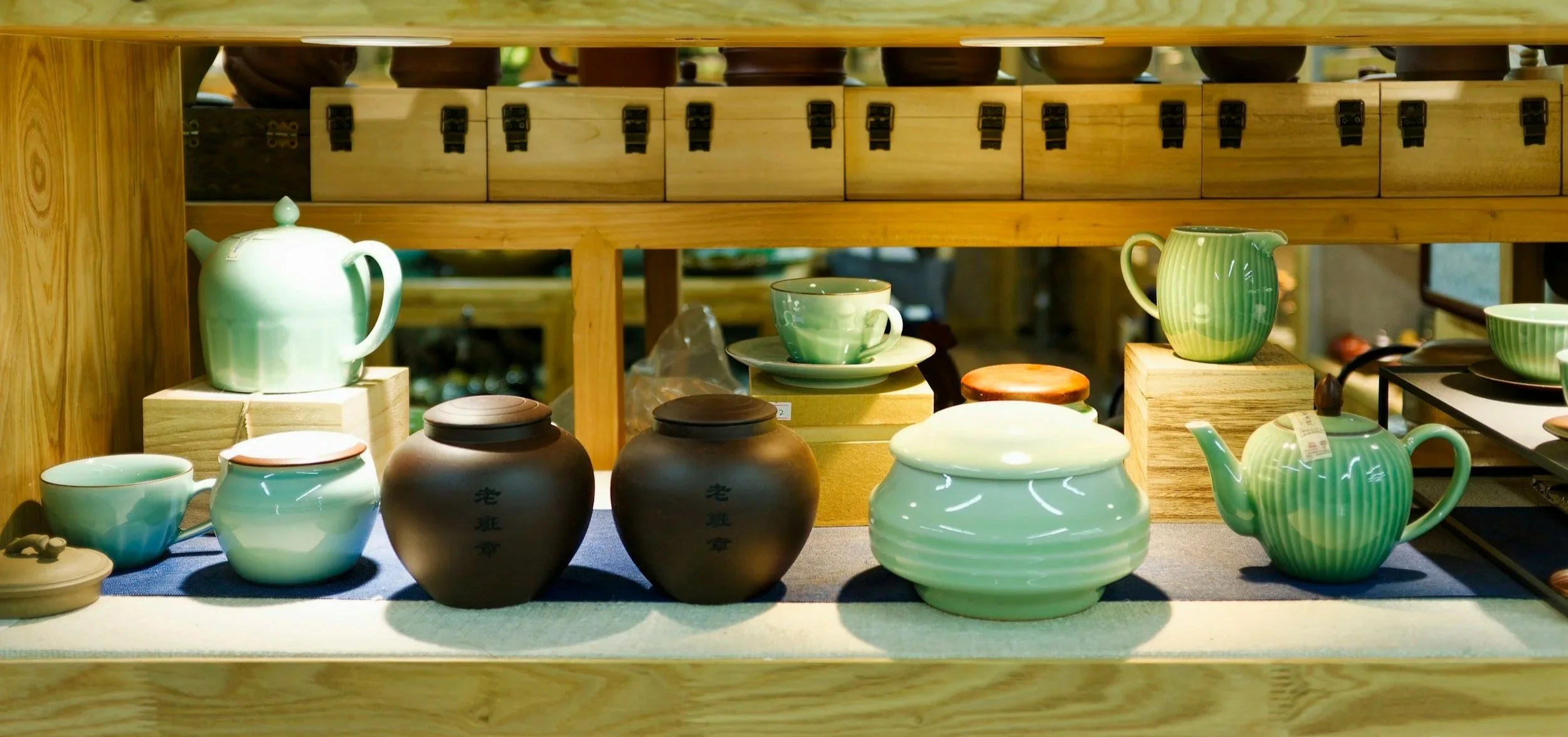
IndieMe is a juried wholesale marketplace built for handcrafted artists and retail buyers in the U.S. and Canada. It's been around since 1998, which makes it one of the longest-running players — older than Etsy, older than Faire.
In terms of structure, it works broadly like the other wholesale marketplaces. Makers apply to be part of IndieMe, create a storefront with their products, and approved retailers are able to search and shop all of those products. What makes IndieMe a little bit different is that every artist on the platform is vetted as making 100% handcrafted work, retailers are vetted quite thoroughly as well, it operates on a flat fee model rather than on a commission basis, and visibility isn’t driven by an algorithm in the way Faire’s is.
IndieMe is owned by Jackie Adamany, who came to the platform first as an artist, then as an employee, before becoming the owner. Over the years, IndieMe has grown beyond the marketplace into what it calls the IndieMe Collective, which includes their IndieMe Academy, seasonal buying events, and a nonprofit arm.
(You can find a comparison of the main wholesale marketplaces here. And an in-depth review of Faire here — including tips on getting better results on the platform, which our Making Faire Work course covers in even more depth.)
How Does IndieMe Work for Makers?
IndieMe follows the basic marketplace model, with a few important differences in how it vets members and how it charges makers.
You apply and go through IndieMe's jury process. Artists are vetted as being 100% handcrafted. Reviewers look at originality, craftsmanship, professional presentation, wholesale readiness, and whether your line makes sense for independent retail.
Retail buyers are vetted too. IndieMe confirms that buyers are legitimate retailers before they can access your wholesale pricing and terms. This vetting goes beyond just a basic “is this a real business” confirmation — it includes things like their website, social presence, business address, credentials, referrals, and other available business information.
Once you've been approved, you build your store, set your wholesale terms, upload your work, and publish.
Visibility on IndieMe isn’t based on a multifactorial algorithm the way it is on Faire. What a buyer sees depends mainly on what they search for and how they browse. Paid advertising adds exposure in designated spots. New artists also get four free Featured Item Ads.
Buyers place orders through IndieMe’s store. All buyer contact information is available to the artist.
There are no commissions or listing fees. Instead, artists pay a flat membership fee, currently $59/month or $548 per year. Artists can also buy an optional Buyer Visibility Package, an advertising bundle that ranges from $350–$800/year.
Curious to hear more from IndieMe directly? Scroll down for our Q&A with owner Jackie Adamany.
How Is IndieMe Different From Faire?
There are several things that are different about IndieMe as compared to Faire:
Visibility not based on algorithm. This isn’t necessarily a good or bad thing, but is important to note. On Faire, your line’s visibility is based on your performance in Faire’s algorithm, which incorporates your performance on everything from conversion rate, to customer service, to catalog freshness. IndieMe’s search process is more straightforward of a “catalog” model, driven by the search terms and browsing behavior of the buyers, with (optional) ads driving visibility in certain areas.
Handcrafted only. IndieMe is exclusively for 100% handcrafted goods made by artists and designers in the U.S. and Canada. Faire is a general wholesale marketplace across nearly every product category. IndieMe’s handcrafted focus also tends to collect around a more “juried craft fair” aesthetic, while Faire’s look is wider-ranging and perhaps more trend-related.
Flat fee model. IndieMe charges $59/month or $548/year with no commission or listing fees. Faire charges a 15% commission on marketplace orders, plus a $10 fee on first orders from each new retailer and payment processing fees of 1.9–3.5% + $0.30 per transaction. Faire Direct orders carry 0% commission, though processing fees still apply. At $59/month, the IndieMe membership costs about the same as Faire's 15% commission on roughly $390 a month in wholesale orders. Note advertising packages do have an additional cost and range in price from $350-$800/year.
Juried approval for artists and vetting for retailers. IndieMe vets both artists (through a jury process) and retail buyers before they can participate. Faire's application process is more of a black box and doesn’t require brands to be handcrafted. Faire does technically vet retailers but the process is less comprehensive than IndieMe’s.
Smaller buyer network size. Faire's buyer network is enormous — hundreds of thousands of retailers globally. IndieMe's is much smaller, made up specifically of retailers actively seeking handcrafted goods.
Pros and Cons of IndieMe for Handmade Lines
Pros of using IndieMe:
No commissions or listing fees. Your cost stays the same as your wholesale business grows.
Buyer relationships and contact information tend to be less concealed/managed by the platform, which means maintaining buyer relationships can be easier and feel less mediated.
The buyer base is made up of retailers specifically looking for handcrafted work, so you aren't competing with mass-produced goods for their attention. Also if your aesthetic aligns well with that of their buyer base, it can be a good community of likeminded people.
Retailers are vetted thoroughly so you’re not wondering about mystery orders or scams.
An algorithm isn’t affecting search (note - this is also a con, see below). Visibility on IndieMe isn’t based on a multifactorial algorithm the way it is on Faire, which can mean that artist exposure could be a bit more equal for artists of different sizes, experience levels, etc.
Artists can reach the IndieMe team directly, including the owner. This is in contrast to Faire’s mega-team that is sometimes responsive and sometimes not.
Cons of using IndieMe:
The membership fee is due whether or not orders come in. In a slow season, that can mean a fixed cost with no sales attached.
The buyer network is much smaller than Faire's, so you could see fewer orders from discovery alone.
It's limited to 100% handcrafted work by makers in the U.S. and Canada. Also, the jury process is selective, so you may not be accepted.
The fact that visibility is not driven by an algorithm also means that you aren’t “rewarded” for things like prompt shipping, great customer service, a fresh catalog, and a good conversion rate.
Faire’s analytics and promotional tools are more extensive. That can be useful if that is the kind of thing you like to set up and manage.
Things to Consider When Deciding Whether to Use IndieMe
IndieMe tends to be the strongest fit for makers who check a few specific boxes:
Your line is 100% handcrafted and the aesthetic looks right for your line. This isn't a "handmade-adjacent" marketplace — it's built exclusively around that category, so the buyer base is specifically shopping for it.
Your pricing supports wholesale margins. As with any wholesale channel, you need pricing and production that can sustain wholesale orders.
You'd rather budget a flat fee than lose a percentage per sale. If you're doing (or expect to do) consistent volume, a flat monthly fee can work out significantly cheaper than commission-based platforms.
You’re open to optional advertising. IndieMe offers paid visibility opportunities for artists who want additional exposure, while artists are also featured throughout the marketplace, marketing, and social channels at no additional cost.
As always, we'd encourage you to think of any single marketplace — IndieMe included — as one piece of a broader wholesale strategy rather than the whole plan. We can't stop singing from the rooftops about not putting all your eggs in one basket. The right mix depends on what your business needs specifically, not on what everyone else is jumping into.
Maybe that's IndieMe for your business, or maybe it's Faire. And if Faire is part of your strategy — or you're still deciding whether it should be — our Making Faire Work course walks through exactly what the platform takes to succeed, fees and all, including a profitability calculator so you can run your own numbers.
Q&A with IndieMe Owner Jackie Adamany
We had a chance to ask Jackie a few questions to understand how IndieMe's approach differs from the other marketplaces. (This interview has been edited for length and clarity.)
Q. For someone who has never heard of IndieMe, what makes it different from other wholesale marketplaces?
What makes us different is that handcrafted is not one category among thousands for us. It is the reason we exist. We are intentionally focused on original work, strong artist-retailer relationships, and helping independent creative businesses grow wholesale in a sustainable way.
We also keep IndieMe very personal. Artists and buyers can reach our team, and they can reach me. I came into IndieMe first as an artist, then as an employee, and eventually became the owner, so I understand the platform from the maker side as well as the business side.
Q. what does your vetting of artists and retailers actually look like?
For us, the word handcrafted has to mean something. Buyers come to IndieMe specifically because they want original work from real artists and small creative businesses. Our jury process helps protect that trust.
When we review an artist, we look at originality, craftsmanship, professional presentation, wholesale readiness, and whether the product line makes sense for independent retail. That does not mean an artist has to be a huge or highly polished company. Some of the most wonderful businesses on IndieMe are very small studios.
On the retail side, trust has to work both ways. Artists are sharing wholesale pricing, terms, and business information. They deserve to know that the people accessing that information are legitimate retail buyers. We look at the full registration and the information they provide about their business, including things like their website, social presence, business address, credentials, referrals, and other available business information. If something is unclear, we research further through public records, directories, Google Maps, social channels, etc.
Q. What does the experience look like from applying to getting that first wholesale order?
An artist starts by applying and going through our jury process. Once approved, they build their store, establish their wholesale terms, upload their work, and publish. But publishing the store is really the beginning, not the finish line.
We are actively bringing qualified buyers to IndieMe, but wholesale works best as a partnership. Artists who participate in their own visibility tend to understand the process much better than artists who simply publish and wait.
That is one of the reasons I created IndieMe Academy. Over the years, I met so many incredibly talented artists who had never been taught the business side of wholesale. They might make beautiful work but not understand margins, buyer expectations, buying seasons, line building, pricing, or how to develop retailer relationships.
Q. IndieMe doesn't charge commissions or listing fees. Why did you choose a membership model?
That model is very intentional. I want an artist's growth to belong to the artist. If someone works incredibly hard, grows their accounts, and doubles their wholesale business, I do not believe IndieMe should automatically take a larger share simply because they became more successful.
Artists also retain their buyer relationships. We do not want to become another barrier between the artist and the retailer. The membership model allows us to build around service rather than extracting more revenue every time an artist makes a sale.
Q. Who tends to thrive on IndieMe, and who might not be a good fit?
The best fit is an artist who genuinely wants to build wholesale as part of their business and is willing to participate in that process. They need an original handcrafted line, pricing that supports wholesale margins, reliable production, good imagery, and a willingness to stay engaged. They absolutely do not need to know everything when they arrive.
The artists who tend to struggle are often those who expect that joining any marketplace should automatically produce immediate orders, or whose business model simply cannot support wholesale pricing or production.
Q. Does Indieme have an algorithm that affects artist visibility, in the way faire does?
IndieMe does not assign artists a performance score that determines how visible they are to buyers. We do not rank artists based on things like conversion rate, order volume, customer service metrics, or how much business they have already generated on the platform. Every artist is treated equally within the marketplace.
What a buyer sees is driven primarily by what they are actually looking for, such as their search terms, product categories, and other ways they browse the marketplace. We are not quietly moving one artist ahead of another because an algorithm has decided that artist is a stronger seller.
Advertising and our visibility opportunities can give an artist additional exposure in designated areas of IndieMe, but they do not change an artist’s underlying standing in the marketplace or give them a better “score.” One of the things that has always mattered to me is that an emerging artist and a longtime successful artist should have the same basic opportunity to be discovered. We do not want success on IndieMe to become a system where you have to already be successful in order to be seen.
Q. Can makers use IndieMe alongside Faire and other marketplaces? And what advice would you give a maker trying to grow wholesale?
Absolutely. I do not think this conversation needs to be IndieMe versus Faire or IndieMe versus any other marketplace. Artists should use the channels that make sense for their business.
What I encourage makers to do is look beyond the size of a marketplace's buyer audience. Ask who those buyers are. Are they the right buyers for your work? What does it cost when you make a sale? Who owns the buyer relationship? What happens as your sales grow?
My advice to makers is to learn your numbers, understand your buyer, build a cohesive line instead of thinking only in individual products, and give wholesale enough time to work. Do not judge your wholesale business by one quiet month or by one marketplace.
We'd also love to hear from makers with experience on the platform. I do very much respect Jackie's experience and approach to the marketplace, so if you've used IndieMe, give us a shout with how it's working for you.
And as always, let us know if you have questions about IndieMe, Faire, or how to think about your wholesale marketplace strategy overall — we're always happy to dig in.
Some Ways We Can Help You Grow Wholesale:

Line Sheet In an Afternoon
Our minicourse gives you a 39-page comprehensive line sheet template to mix, match, and modify — along with the guidance, motivation, and help you need to make a great line sheet fast. Learn more here.
4 Things About Faire Most Makers Get Wrong
Get your free guide & discover: What Faire actually requires to succeed (and what most sellers never find out), the real limits of the platform, and exactly how to decide if Faire is worth it for your specific business. Learn more here.
More Free Resources on Faire and the Wholesale Marketplaces
Faire Wholesale Reviews 2026: Is It Worth It for Independent Brands?
Faire's Set-It-And-Forget-It Myth and Why We All Believed It
How to Compare and Choose The Right Wholesale Marketplace For You
At Wholesale In a Box we do not receive any commissions or compensation of any kind from IndieMe, Faire, or any other marketplace. All of our educational content is meant to support makers and small brands in making the right choices for them.