
A little update: I wrote this piece while pregnant with my second — that baby is now a rambunctious 4-year-old, running around with his big brother. The heart of this (and all the honest stories below) still rings just as true today.
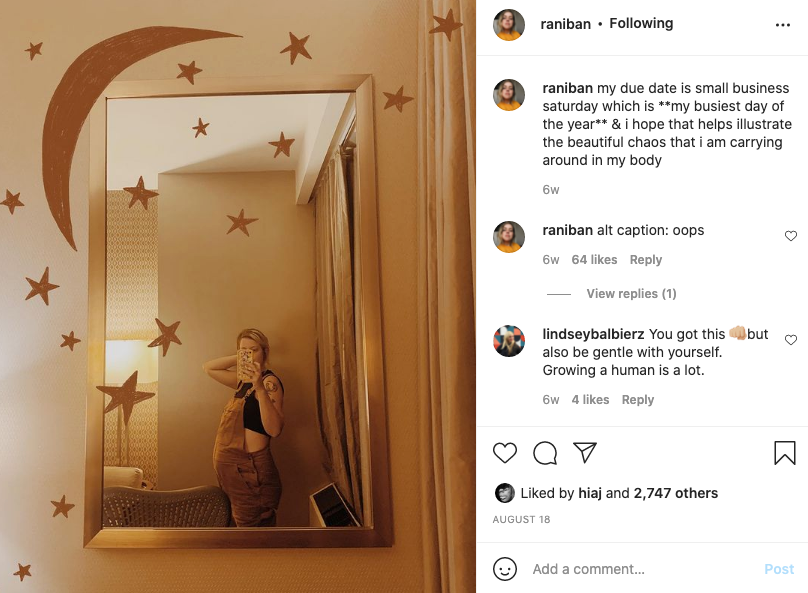
As I write this, I’m starting the third trimester in my second pregnancy. I’m at the stage of pregnancy where I can’t bend forward to put on my toddler’s socks, meatloaf seems like a reasonable breakfast food, and crying is pretty common.
I’m also planning for the weeks and months after the new baby arrives. My first baby is now almost three. And at this stage in my pregnancy with him, I was frantically gathering information about what to expect in the postpartum period. I was really confused about parental leave and maternity leave as a creative business owner. I had a hunch about what I’d need and how to handle the time. But I didn’t feel like the models that existed were very useful to me. And so much of what I read said “YOU HAVE NO IDEA HOW YOU WILL FEEL WHEN THE BABY COMES.” Which, of course, made it hard to plan.
As I wobble into the final months of my second pregnancy, I’m finding that so many of the questions I had the first time around are still present for me, even as I also have additional experience to draw on and more confidence that I can trust my hunches about what I want to do. I still wonder how I’ll keep my creative momentum going even as I rest. I still wonder what childcare will look like as we add another child to our family. I still think about how I can “get out of the way” of my own business to allow it to thrive. I also know that I’m surrounded by a community of thoughtful, creative, intrepid people who have navigated this topic in a variety of ingenious ways. So in this article, I’m sharing what I’ve learned about navigating maternity leave and parental leave as a creative business owner -- and I asked some of the makers and parents I respect most to share their insights as well.

Before we jump in, some caveats:
This article is about humans who run their own business and are makers or artists -- and who are bringing a baby into their family. That can mean people who identify as mothers, fathers, parents or none of those. It could mean folks adopting, fostering, birthing a baby, or receiving a baby into their family in a different way.
Our ability to plan for our own time is dramatically impacted by our identities. Adoptive parents, single parents, queer parents, foster parents, poor parents, rich parents, white parents, BIPOC parents, and people who don’t identify as parents but who are bringing a baby into their lives -- your experience of the post-baby period will be dramatically affected by your identities. (Not to mention your individual personality and values.) So please take what suits you, adapt what you can, and discard the rest.
This kind of article can be hard if you want to have a baby and you can’t for a variety of biological, practical, or situational reasons. If that is you, you certainly have my permission to close this window and return to this when it doesn’t hurt so much.
If you or your baby is sick, injured, preterm, or has special needs, so much of this won’t apply. In those situations, some or all of your regular life will need to simply be on hold until health and equilibrium return (to the degree that’s possible for you.)

The Parental Leave Models
When I was pregnant for the first time, I tried to gather perspectives and guidance about how I might structure those first weeks and months. And let me tell you, as soon as people know you are pregnant, they are happy to tell you everything they think about pregnancy and baby-rearing.
On one hand, there is the model of the 3-month maternity leave that is familiar to those who work in a corporate context. In other industrialized countries, there are 6, 12, even 24-month maternity leaves paid for and mandated by the state. Many business owners look around and see the status quo of 3 months and feel like they deserve at least that, if not many months more -- and so use that 90-day time as a goal. When I tell people with “regular jobs” that I intend to start easing back into work after 2-3 weeks completely off, I usually get a look that is somewhere between pity and judgment -- they tend to be concerned I’m not “taking the time I deserve.”
Others look at the 90-day leave format and feel like 3 months off is bizarrely, dramatically more time off than they could take (and still have a business to return to when they got back.) These folks are those returning emails from their hospital bed just hours after the baby arrived. They are determined to keep things afloat in any way they can and rest as little as they can get away with. This model is simple in some ways -- change as little as possible about your business and just try to do as much as you can.
What Resonated With Me
Perhaps one of the models above does resonate with you. If that’s the case, that’s good because you have some people to emulate and a bit of a path you can walk. But for me, neither of these models resonated.
I’ve found more models in the art world than in the corporate world. (Also see this incredible Artist Residency in Motherhood project.) I’ve found more models in this dense tome that looks at motherhood historically and anthropologically (one of her findings being that in traditional hunter/gatherer societies, children spent an average of just 20% of their time with their mother by the time they were 3 years old.) I’ve found models in my neighbor who has 5 kids and seems to take each new arrival in stride, and in balance with her needs and those of her other kids. I find more resonance when I remember the women I worked with in the Dominican Republic who ran farms with their babies playing in the shade of a nearby tree -- women who slowed their activity dramatically with a new baby but didn’t step out of their “regular” life and work altogether.
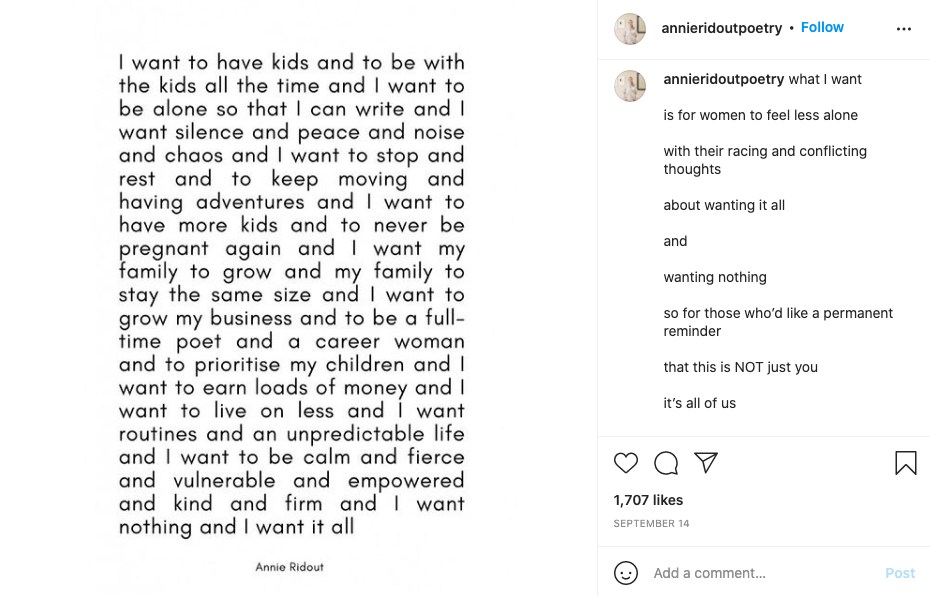
I wanted to create space in my business and life so that I could have a short period of profound rest and adaptation when the baby first came. And I didn’t want a lack of planning or ingenuity (with respect to cultivating the capacity of my team) to force me back into an amount of work I wasn’t ready for, too soon. On the flipside, I also knew that because my work is so satisfying and interesting and energizing for me, I wouldn’t want to be completely disconnected from it for longer than a few weeks (health permitting). So none of the usual models seemed to work for me.
“My work [is] a conscious decision, a longed-for bed which I enter gratefully and from which I rise up empowered.” - Audre Lorde
For me, it wasn’t about taking as much time off as I could, as I knew that would leave me depressed, unmoored, and frustrated. It wasn’t about getting back to work as soon as I could, as I knew that would leave me drained and brittle. It wasn’t even about finding a balance between those two extremes. For me, it was about being honest with myself about my own needs, joys, fuel, and desires postpartum. It was about trusting that I did have wisdom about what I would need and want during that period (even if I had never experienced it before.) And it was about setting up the supports and frameworks that would help me in the specific way I believed I’d need. In my case, that meant honoring the rest and renewal that fuel my role as a mother and as a creative business owner. And it meant honoring the crucial role that my work and creativity play in fueling my own wellbeing and growth.
Parental leave is important and not important. It’s not important because it’s a short blip in the life of a business, parent, and baby. But it is important because it lays the foundation for so much of what is to come in both realms. It’s important because we make decisions about the endeavor of parenting-and-working that become patterns.
Below, I want to offer my experience of what worked for me -- as one data point that hopefully liberates you to design a structure that works best for you. (Whether you’re just expecting a new baby or whether you’re redesigning your approach to parenting and work many months after the baby’s first arrival.) And then we’ll look at an array of other examples and approaches from a diverse set of parent/makers.
Here’s what worked for me on a logistical level:
Weeks 0-2 Postpartum: Being Completely Off.
For me, that meant I had pretty much zero expectations of myself, at all, during that time. I didn’t text people. I didn’t do dishes. I didn’t answer emails of any kind. I didn’t wear things that weren’t leggings and flannel shirts. I ate what my body needed and rested like it was my job (which it was.) I also did things that I knew would fill me up, like taking short walks outside, seeing family in short bursts, doing some simple crafting, reading, yoga, etc. I had the luxury that my husband was also completely off during this time, so we cared for the baby together (as in, feeding and changing the baby together every time) and my husband picked up the slack with household and logistical things.Weeks 3-6 Postpartum: Easing Into Work.
From about 2.5 weeks postpartum until about 6 weeks postpartum, I eased back into work. I did things that felt like a good fit with my brain state and energy level. I answered emails and answered my team’s questions. I worked when I felt like it, for as little or as much as I felt like working. Most days, this meant between 20 minutes and two hours. I tip-toed back in, gradually increasing the time and complexity of what I did. One key aspect of this time was that I had structured things so that I still wasn’t the bottleneck in my business. Nothing time-sensitive depended on me so it was practical for my internal state to guide what and how much I did. The baby’s schedule of sleeping and eating was the primary rhythm during this time, so work and other things fit into that (rather than the other way around.)Weeks 7-16 Postpartum: Back to Normal-ish.
By about 2 months postpartum, I was back to much more of a normal work approach, within the hours I had available to work (which were about 4-5 hours per day.) My husband and I divided up my son’s care 50/50 and we worked the rest of the time. We actually also traveled during this period as well -- a week in Montreal and 5 weeks in Mexico City. These were working trips, where we continued our work/baby tradeoff schedule. I think that the somewhat rigid structure we set up for who was caring for the baby at what times was really supportive in terms of creating an equitable sharing of roles that continues for us to this day. We put all our 50/50 “time blocks” for work and baby in the Google Calendar and didn’t modify them for barely any reason. I was still breastfeeding during this time, so if the baby needed to be fed during my work block, my husband fed him with a bottle (usually with some supplementary formula in it) and I waited to breastfeed until my “baby block.”Weeks 16+ Postpartum: The Coming of Daycare.
We had originally planned to have my son start at a small in-home daycare (part-time hours) when he was about 3 months old but it turned out that they didn’t have room for him until he was 4 months old, so that’s when he started. Because we had the luxury of having him at daycare part-time hours (4 days a week, about 8am-2:30pm), I didn’t feel torn or bereft without him. I felt energized at the focus and freedom I had to work and rest and thrive and think when he was outside of the house… and more present with him upon his return. This schedule is roughly what we still have today (at three years old) after a year-long break during Covid when we didn’t have childcare. During the non-daycare hours, my husband and I split my son’s care time with the 50/50 time-blocking schedule.
Bigger lessons I learned that I hope might be helpful:
Let yourself know, if you do.
You probably have a better idea of what you’ll need than you think you do. People say that “pre-baby you” has no idea what “post-baby you” will feel or want. My experience was that my pre-baby hunches were pretty much spot-on in terms of what I needed and what worked. So try to hear whatever intuition and insight you do have, and plan accordingly.Let people help.
We don’t just belong to ourselves. We, our businesses, and our babies belong to a family and to a community. Let the people in your family and your community help you. If you have a partner, expect and allow and collaborate with them to be 50/50 partners in the care of your home and baby. (Note: that involves both relinquishing control and accepting support.)Let it be a growth opportunity for your business.
Use this as an opportunity to hire and manage in the ways you know you should. In the months before my first son was born, I asked myself, “where am I making myself a bottleneck that I don’t need to?” And I tried to get myself out of the way of my own business. You may or may not have a team that you can work with. But we all have ways that we can step out of the way. Maybe that’s finally using a social media scheduling app to get off the daily post treadmill. Maybe it’s hiring someone to help 5 hours a week. This will look different for everyone, but you likely already know what it should look like for you.Let it be (as) easy (as possible.)
My experience was that if I let go of the things that didn’t matter (what’s a suitable baby outfit, what’s the best diaper brand, how quickly non-customers got their email responded to), there was plenty of room for the things that did matter. One thing that helped us in this way was to identify the 4-5 principles that DID matter to us as a family. We wrote these out when I was 6-months pregnant and we referred back to them frequently. My honest life hack is that I try to prioritize those principles and I put pretty much everything else in the “doesn’t matter” bucket. You don’t have to let guilt and anxiety characterize your experience of parenthood (or business).Let the parts you love fill you up.
Whatever part you love about caring for the baby, let yourself do lots of that. It will fill you up for the parts you don’t love as much. I didn’t love breastfeeding but I did love lying on the bed with my baby and reading books to him. So I took care of feeding times efficiently and luxuriated in the book-reading times.Let there be phases.
Do less at first, and more soon. For instance, you do need to rest. But you likely don’t need to refrain from short walks for 6 weeks. The very early days or weeks are one thing, and the subsequent weeks are another. Two weeks after my baby arrived, I tried to play Memory with my 4 year old niece and my brother. No joke, they BOTH beat me about 10 to 1. I simply couldn’t remember where that card with the frog in the hat was. But 4 weeks after my baby came, I was typing out high-level strategy and taking sales calls.Let ‘em wait.
You don’t owe updates to anyone. Talk to people as you feel ready. Put your phone on Do Not Disturb. Send baby gift thank-you emails instead of cards. Let your email pile up. This is a unique moment in time and it’s OK if your responsiveness is lower than normal (or nonexistent).Let your experience be unique.
Other people may have radically different experiences of this time. Pay attention to what’s actually happening for you and for the baby and respond to that. If someone has “advice” or “knowledge” but they don’t make you feel stronger, seen, and clearer when they deliver it, move away from that and protect yourself from what they have to say -- it’s not worth it.
Stories + Lessons From Other Small Business Owners
I reached out to several makers who were both generous and honest in sharing their thoughts and experiences and what they would recommend to other creative business owners.
Cindy Liebel
My kids are about 4.5 years apart, almost exactly. My son will be 19 in November and my daughter is 14 now. Honestly, it was pretty tough for me to build my small business after my daughter was born. At some point when she was a baby and into her toddler years, she had a hard time napping. She would nap if I napped or maybe while we're in the car running errands. Sometimes if she was playing on the floor, she would nap and I'd leave her there so she could get some rest.
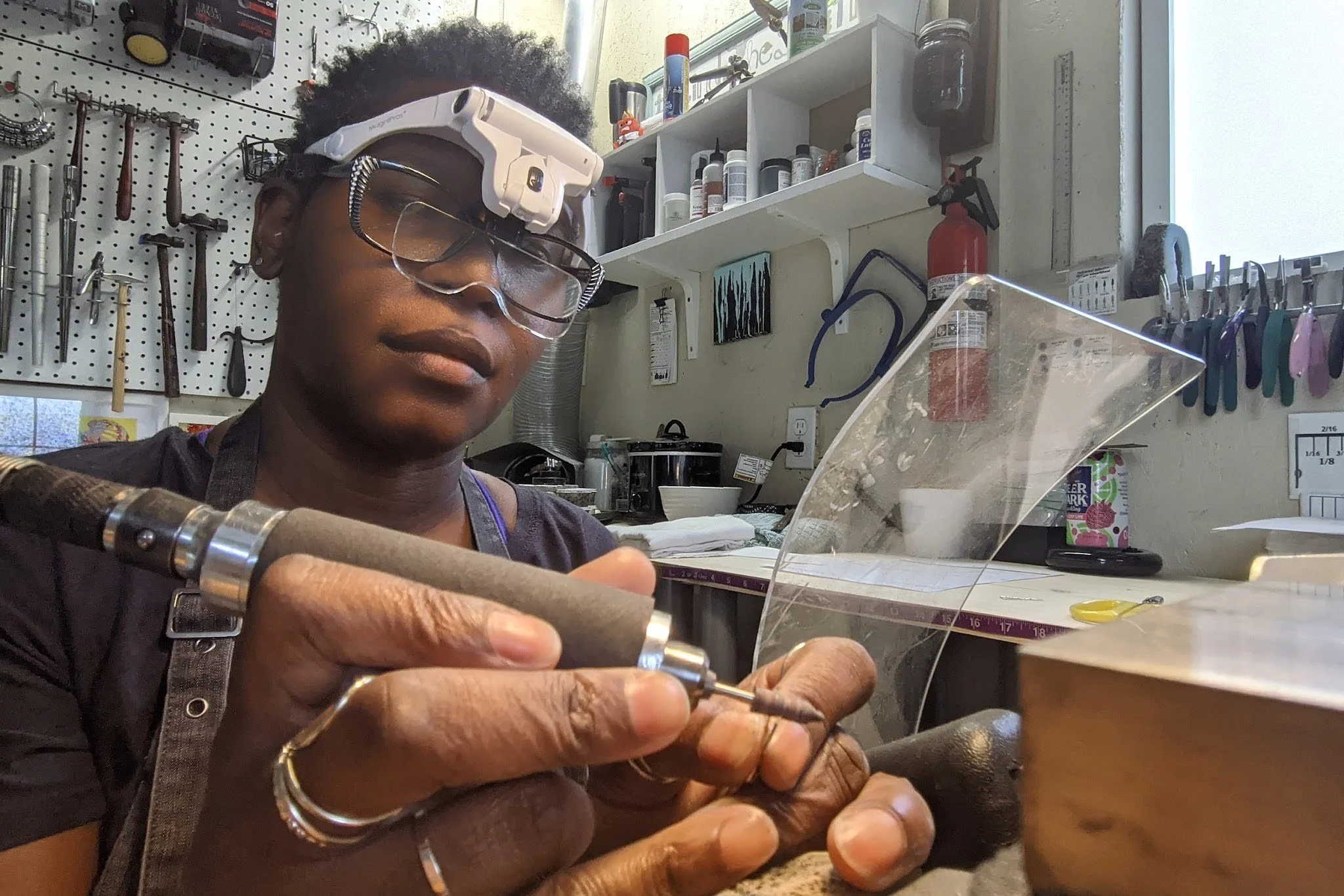
I would have to stay up at night to make jewelry or build my website and that was hard because I am an early riser and I used to run every morning at 5:30 before she woke up. At some point, I put my jewelry business on hold for a couple of years, and during that time, I didn't make much jewelry, or if I did it was only on the weekends when my husband was home to help out. A few hours each weekend helped me move forward and I made a point to only have a few of my best sellers available for purchase. Downsizing my jewelry offerings did help manage the creative side of my business. Then, when my daughter started attending preschool three days a week for 4 - 5 hours a day, I had time to work in and on my business. I used that time to focus on all the things I needed to get down. It was a relief to have these extra hours three times a week to finally create again. Days when my daughter was home from preschool or my son was on school break, I spent more time with them during the day and in the evenings once they were in bed for the night, I would spend a few hours each evening making jewelry and fulfilling orders as needed.
My advice for a new parent or when there's a new baby on the way:
Re-evaluate your products and figure out what is easier and quicker to make in the long run, this includes your best sellers. If at all possible, set aside time to build an inventory of these products to save time. Once sold out, create a backup plan offering pre-order for those pieces.
Make sure your office/studio/workshop is organized for ease of flow if you plan on hiring others to, say package orders, do light work, etc.
Take time to create any graphics for marketing for up to six months or hire someone to do this for you. This will help out when it's time to swap out images and keep your website fresh and updated every few months as well as social media.
Do not worry about posting to social media every day. Find a few days a week or none at all and share then. Maybe schedule monthly emails to send to your list.
Keep it all simple! Take time off to spend with your new baby. After maternity leave, ease your way back into the business and start with a small schedule, and set aside 1 - 2 hours each day for a few weeks.
Beth of Front Paper
Something I didn't expect about being a maker and new parent (well, once you get past those hazy first few months/start to get more sleep) was how much more efficient I was with my time. Having small people to care for obviously adds a lot of new tasks into your life, so when I had time to do other things, I maximized that time. That efficiency is something that has stayed as my kids have gotten a little older too.

Making is a part of my livelihood, but it still remains very much a haven for me. Painting and drawing have always been something I love to do and that didn't change with having kids. In fact, in some ways, it felt so much more needed because it was something that was just mine in a time when you're giving so much of yourself to sustain these little lives. I really needed that.
One other thing that's coming to mind is how important carving out time to work (outside of the job of parenting) has remained for me. Before I had kids, I didn't think I'd want to be a full-time parent. I thought that might change once I had kids, but it didn't. In fact, one of the hardest things about my maternity leaves (I'm Canadian, so they were 9 months - a year) was parenting at home full time. I was depressed and really struggling. Now that my kids are 5 and almost 3 and in daycare/school 4 days a week or so, I'm in a better place than I have been in years. Of course, that's not the only factor in my being in a really good place, but it is certainly part of it. I guess I just want new parents to know that it's going to look different for everyone - no one can tell you what is going to be best for you and your family.
Lara of Paper Wolf Design
I knew having my first baby would change my business but I had no idea quite to what extent. But that’s first-time parenthood in general, right. You learn and grow a lot! The biggest hurdle to motherhood and running a business for me and I imagine for many is not having enough TIME.
When I became pregnant I never even considered taking time off. I didn’t think my business was successful enough to take maternity leave. I felt like my business wouldn’t survive without my full attention. I was actually responding to emails from the hospital. I regret this now but at the time I didn’t really have good info on how to take maternity leave from your own business. Or even know that that was a thing you could do when you were a small maker. But I was very lucky in that my partner was home for 6 months after my son was born. Having his full-time help was crucial in juggling the transformation of motherhood and keeping the business afloat. For the first year that’s what it felt like… just keep things going. I told myself just keep this little person alive and keep my business alive. I’ve learned so much since then and my business is in a much more stable place. I would absolutely take more time in the first few weeks if It were happening right now.
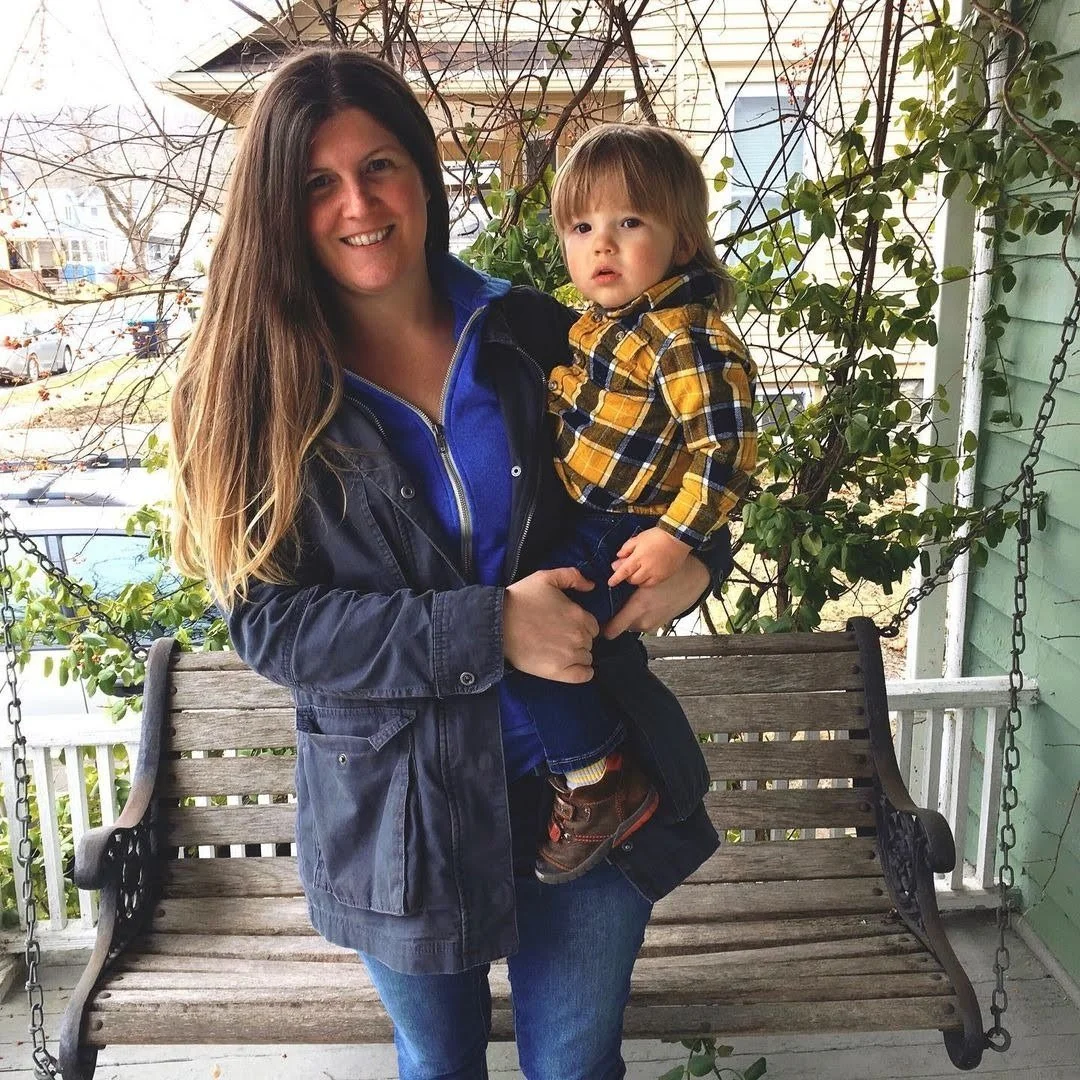
When Iver was about 3-4 months I realized I wasn’t going to be able to do everything anymore. So I decided to scale back and focus on what was working. For me, that was wholesaling greeting cards. So I stopped doing craft shows and hired my first sales reps. This meant I didn’t have to focus as much on outreach for sales. I also stopped designing anything but cards. At the time I was also designing art prints, notebooks, notepads, and enamel pins.
Iver is now almost 3 and just started a bit of outside childcare for the first time. Even now, having enough time for my Business continues to be the biggest struggle. For me, it was an issue of both the expense of childcare and also wanting him home with us for the first couple of years. Then throw in a global pandemic and not wanting him to be outside the house and my entire experience as a mother and business owner has been negotiating and trading work time with my partner who also works part-time.
I like to say that I run a full-time business in part-time hours. And as hard as it’s been I wouldn’t change a thing about getting to be with my son so much during these very young years. I was/am still surprised by how much more efficient I am with my time. I get so much more done because I’m never quite sure when the next chunk of work time will come. I’m also so glad that he gets to see me work. I was raised the same way and it definitely was partly what drove me to want to work for myself. The amount of time I got to spend with my parents and also the freedom in it. I love that we can take off on a random weekday and go on adventures. I love that what I do for a living is a part of his childhood.
Sara from Squar’d Away
I had a baby and had given myself 3 months for maternity leave (only filling wholesale orders, no pop-ups/web orders) and as soon as it was over, the pandemic hit, and I was home alone with a newborn baby and a business to run. My advice here is to go with your gut and do what feels right. I was so tired but I knew I had to do certain things to keep Squar’d Away afloat and I would do them as soon as my baby would go down for a nap. I would be working in an actual pile of stuff (laundry, dishes, etc) but I had prioritized my business and somehow my focus was turbocharged during these precious hours because I didn’t know if I had 15 minutes or 3 hours to get what I needed to do, done. The successful launch and response to our printed faces masks at the very grim height of Covid in NYC gave me the fuel I needed to keep going to release even more new products and fulfill orders. I was running on adrenaline a lot of the time but I look back now and I’m very proud and impressed with what I was somehow able to accomplish.

Structuring time off is hard. As I write this, I’m sitting in a beautiful hotel room in Rome working away at my computer while my husband and baby nap in the other room. At least for me, the only way to 100% step back is to have help (which I have a hard time doing) otherwise, there is only less work, not zero work. That being said, I’m in ROME with my family having an amazing time because my work offers me this kind of flexibility and that is something I’m very grateful for.
This might be too specific to my situation but I was surprised to find a new happiness in doing my work because sometimes, sitting and focusing for extended periods of time feels like a luxury. Is that sad? My husband Dan is a Pulmonologist and ICU doctor so he basically is a Covid doctor. And has been extremely busy since this all started. I’m very lucky and have help at home but since I run my business from our apartment I’m always around and somehow, things still fall on me to take care of while I should be locked away working.
My advice to a maker with a baby on the way:
Be realistic and flexible in your new reality. I can’t quite remember what I expected before I had a baby but it wasn’t this. I remember being bewildered by how all-consuming it was at the beginning and how days would fly by in what felt like minutes and what had I done besides feed and burp and change my baby over and over again? I learned to let go and go with the flow. Otherwise, I would have gone mad. Things happen that you can’t predict or schedule… several times a day. Do what you can in the moment and be satisfied with what you accomplish, no matter how small it seems. Adjust the plan accordingly day to day or minute to minute.
Leela of The Rainbow Vision
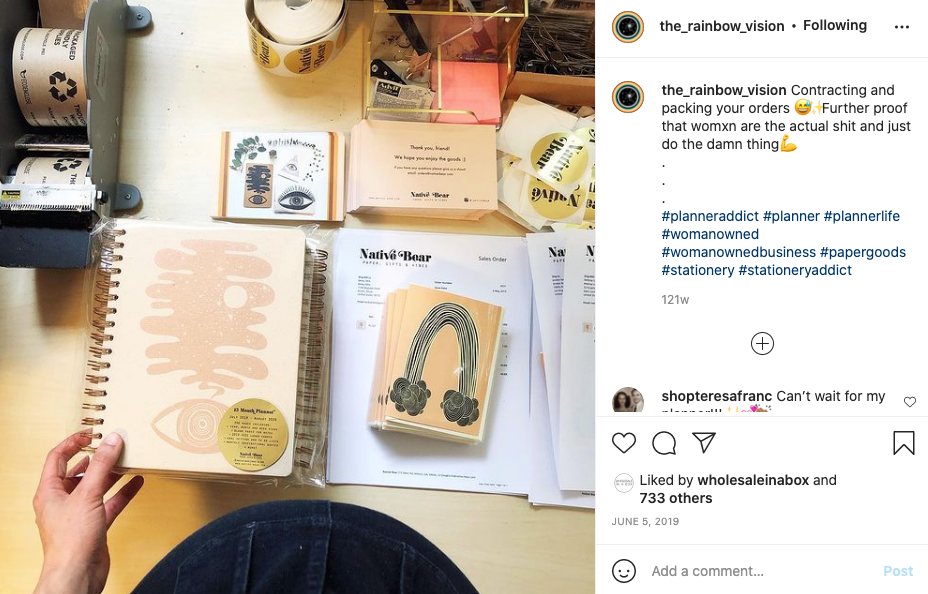
I think the best piece of advice I was given which continues to unfold today (even after two years since my son was born) is “be kind to yourself”. For many years I felt a sense of urgency in needing to churn out new work regularly and when my son was born I quickly realized that was not going to be possible for a while. I think many creative folks feel incomplete, or that we may be lagging behind the rest of the world when we can’t produce produce produce.

But the reality is that your mind, body, and spirit are going through a major shift after you have a baby (whether you birthed them or not!). You’re going through a big life change, and accepting your new lifestyle where your child takes precedence over your work is part of that. That doesn’t mean you don’t respect your own needs or lose your autonomy though. You’re just going to work at a much different pace, and you will have to set parameters on when you need to focus on your creative process. The creativity will come, and you may even be surprised at how your work changes and evolves. You may find that you want to streamline and narrow your focus on what you actually care about working on. Babies have a way of keeping you real!
Angie of Overlap Craft
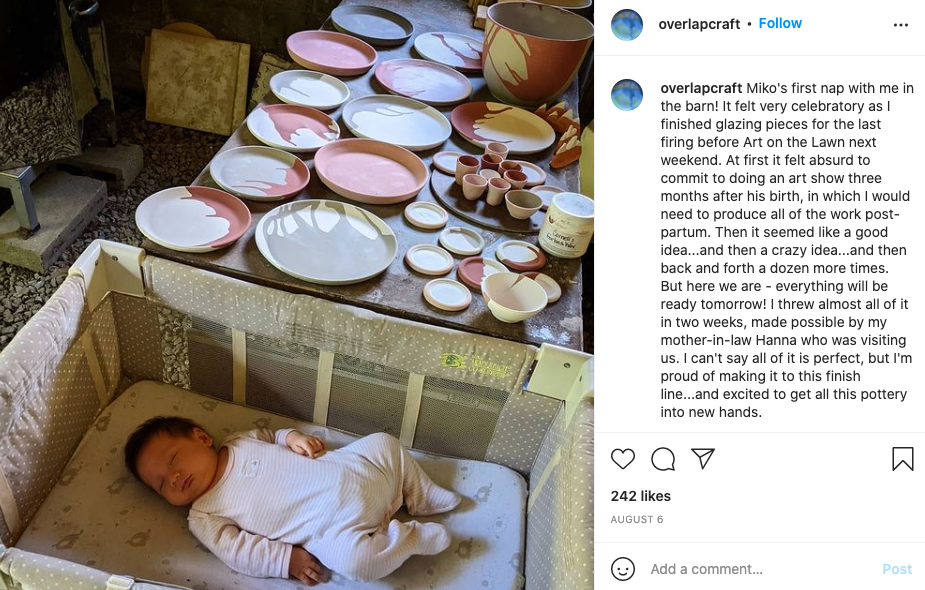
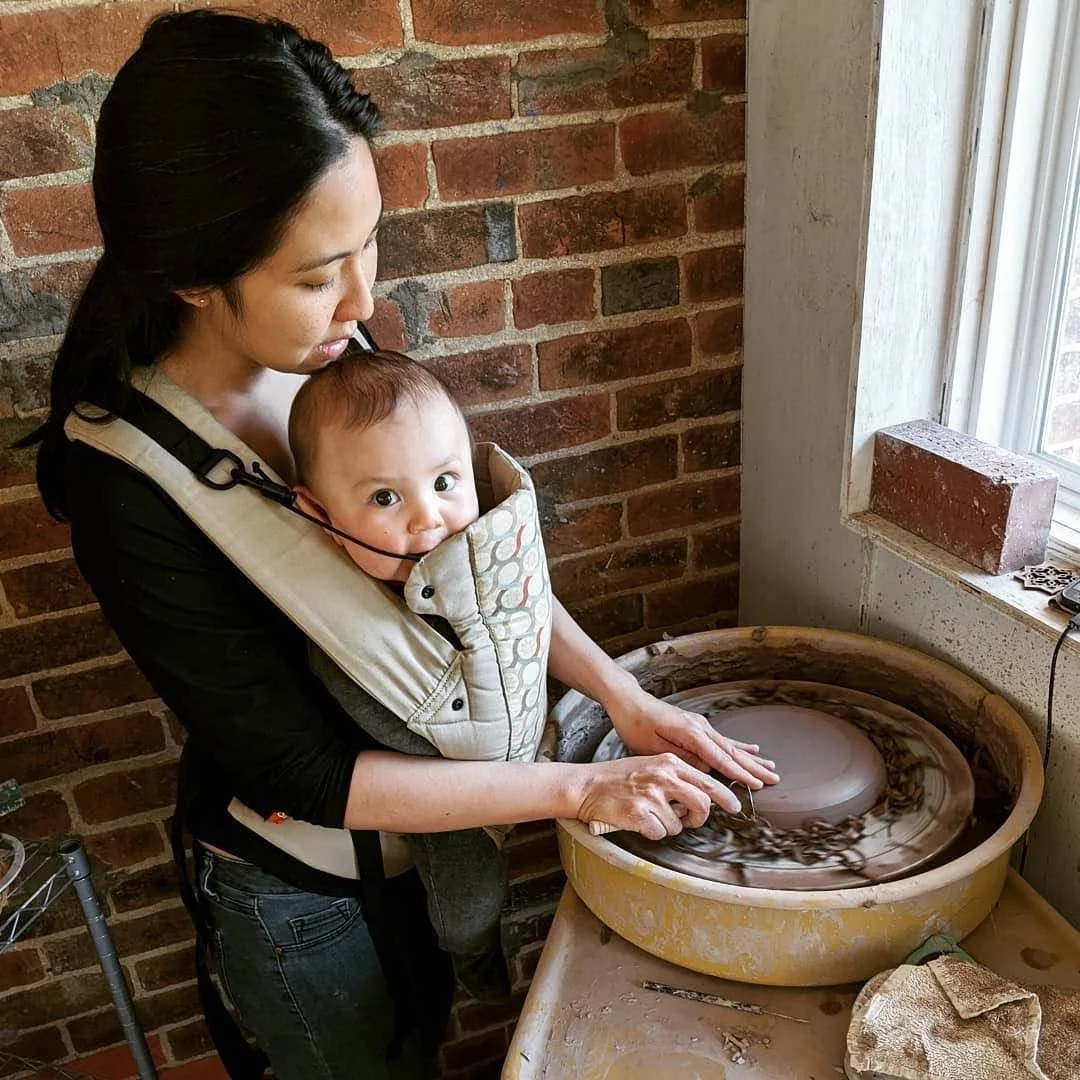
Physically I couldn’t continue doing pottery at the end of my pregnancy with Miko, or when he was first born. Miko was born on May 15th and there was a show in mid-August -- which I wasn’t planning on doing, because during the first three months, I wanted to just make what I wanted to make and not have any outside pressures. But then, my husband’s parents said they were coming for a few months so I did sign up for the show. Suddenly, though, my father-in-law broke his ankle so only my mother-in-law was here, and instead of two months, she only came for three weeks. At that point, I had a breakdown when it seemed like it was going to be a total mess. My husband I made it work. We works full-time, so sometimes had 1-2 hours and sometimes I didn’t have any time to work. While my mother-in-law was here, I did have two hours a day. It was really interesting to not set goals. For instance, usually, I say, “I’m going to make 10 bowls and then I’m going to take a break.” With this, no matter what happens, I get an hour of work, so I had to time myself since the time would end regardless of what I did.
My advice: you make a plan and you have to be prepared that it may not go the way you want it to. So for instance, I thought I’d have my in-laws’ help for the art show. When I didn’t, I made a list of friends that would be willing to spend time with Miko and did that when I was under a lot of pressure. So it required thinking about who people are I can count on and ask them for help.
I’m still really struggling with parenting. It wasn’t this way with Kai because Kai was a very chill baby. Miko needs to be held a lot more and doesn’t nap unless he’s in the sling, on me. So that’s changed my expectations. Because Kai is in daycare. But I can’t really be with Miko and also squeeze in an hour or two of work.
During those two to three months after Miko was born, I didn’t want the expectation to make pottery, but I still wanted to feel like the business was moving. So I told myself I would post on Instagram, take pictures of my work, ask friends to take pictures of my work. There were moments when it was 4 am and Miko was awake and so I would post pictures on Instagram. Social media can be hard for me. So I tried to make a list of things I could do that would help me feel like there was forward movement and progress.
The other thing that was really important was to feel other ways of being creative or doing creative things like we actually just installed a stained glass window that my mother-in-law made. And I had designed it two weeks after Miko was born, from bed. There were small things I did to continue to make and be creative even if it wasn’t directly linked to the business.
I do have guilt when I’m working and feel like I haven’t spent a lot of time with, say, my older son, on a given day. Or if I’m in the middle of doing something with my pots and I have to go be with the kids, sometimes I’ll feel resentful because I want to finish what I’m working on. So I’m really working on being grateful and present for the time I have to work and for the time I have with the kids. I got the advice that it goes in waves and seasons -- and so I’m trying to allow that and let the more intense times be followed by lower-key times. For me, for now, that’s what I’m holding onto.
I’m also making pottery in a different way. Usually, you throw something and then wait until it gets leather-hard to trim and adjust it. I’m throwing in a different way so that I don’t have to come back and trim. Because otherwise, I’d throw pieces and go check on them when I was free but they were too soft to trim. Or I’d come too late and they’d be too hard. What it means is that it changed my pieces. They aren’t as light and the feet of the pieces aren’t as refined. And it’s hard. Part of me worries about that but I’ve started to think that it’s meaningful to see that the work is influenced by the time of life I’m in.

No corporate maternity leave model ever felt right to me. Here's what actually worked during my own postpartum months… plus honest, real-life stories from other maker parents navigating the same wild ride.